Life
A Complete Guide to Your First Trip to Korea — From Entry Documents to Transportation, Currency Exchange, Food, and Etiquette
For those who are new to this and feeling overwhelmed, I've taken care of everything except for the final decision.
Hello 😘
I’m writing this post today with first-time visitors to Korea in mind, and I’ve been thrilled the whole time I’ve been writing it.
Is there really this much I want to tell you?
Documents, Transportation, Money, Food, Etiquette — We’ve compiled a list of only the essentials you’ll need to make decisions, in the exact order that first-time visitors actually encounter them.
If you save this post, you won't need to look anywhere else before you leave the country.
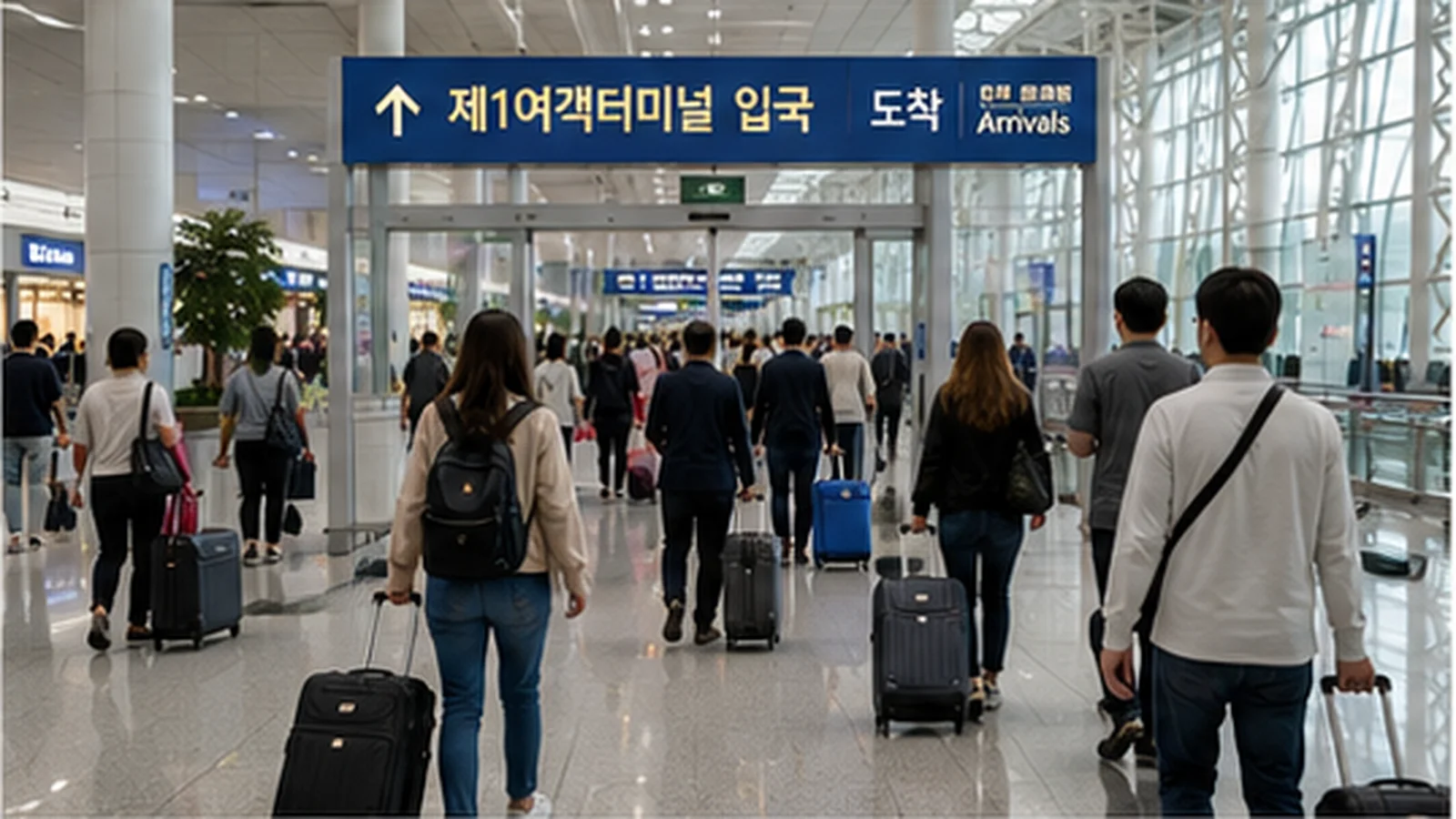
Incheon Airport Arrivals Hall: The Starting Point of Your First Trip to Korea
✨ Documents to Check Before Departure: Just Two Things
Before you look at your plane ticket, check your documents first.
After your passport (make sure it has plenty of time left before it expires), the next thing to check is K-ETAWow e-Arrival Card That's all there is to it.
Documents | Who is needed? | When and Where | Cost |
|---|---|---|---|
K-ETA (Electronic Travel Authorization) | Among those eligible for visa-free entry Not an exempt country Nationality | Apply on the official website before departure | Fees apply — Check the official website |
e-Arrival Card (Electronic Entry Declaration) | Almost all foreign nationals entering the country without a K-ETA | Arrival Starting 72 hours ago Online Submission | Free |
Citizens of 22 countries, including the United States, the United Kingdom, Canada, Australia, France, Germany, Japan, and Singapore, K-ETA Exemption Through December 31, 2026It has been extended.
If your country is on the exemption list, you only need to submit the e-Arrival Card instead of the K-ETA; if you have already received a K-ETA, you are exempt from submitting the e-Arrival Card—in other words, you only need one of the two.
The e-Arrival Card entry screen, which can be submitted starting 72 hours before arrival
📱 Just 4 apps—and Korea is yours
In South Korea, Google Maps doesn't work properly for walking or driving directions due to map data regulations.
If you come here without knowing this, you'll end up going in circles in the alley from day one.
I make sure to install the map app before I leave the country. — At a house with Wi-Fi.
App | Purpose | Why this one? |
|---|---|---|
Naver Maps | Maps & Directions | It offers the best foreign language support and the most accurate walking and public transportation directions |
KakaoMap | Maps and Transit Information | Subway arrival updates down to the second, including information on which cars are best for quick transfers |
Papago | Translation | Korean-Specialized Translation App — Excellent at Translating Photos of Menus |
Kakao T | Call a Taxi | Korea's Standard Taxi App: Just Enter Your Destination in Advance—No Need to Worry About Language Barriers |
All four are free, and all four support English.
You can use either map, but since it doesn't take up much storage space, I recommend installing both.
4 Must-Have Apps to Install Before You Leave the Country
🚆 Transportation: Pick one card and get started
The base fare for the Seoul Subway, based on the use of a transit card, is 1,550 won, A single-ride ticket costs 1,650 won.
Since buying tickets every time isn't cost-effective, the key is to choose one card that fits your travel style on the first day.
Card | For travelers like this | Cost | Notes |
|---|---|---|---|
T-money | A safe default setting, used nationwide | Card: 2,500–4,000 won + recharge | Available for purchase at convenience stores and subway stations; remaining balance can be refunded |
WOWPASS | All in one card, including currency exchange | Check the kiosk for issuance and currency exchange fees | Prepaid payment card with built-in T-money functionality, for foreign visitors only |
Climate Companion Card (Short-Term Pass) | People who plan to ride the subway and buses all day in Seoul | 5,000 won per day / 10,000 won for 3 days / 15,000 won for 5 days | For use within Seoul (excluding certain routes) |
Prices and points of sale are subject to change — please check the official Seoul tourism website for exact details
If you take public transportation four or more times a day, a short-term pass is the best option, and if you’re traveling outside Seoul (to places like Busan or Gyeongju), a T-money card valid nationwide is the way to go.
One pitfall — T-money Recharges are cash only That's correct.
You can't top up your card with a foreign credit card, so be sure to carry some cash with you.
From Incheon International Airport to downtown Seoul via the Airport Railroad AREXIn terms of value for money, the order is: (regular/direct), airport bus, and taxi.
For the most accurate information on fares and schedules, please check the official website.
Just one tap of your transit card connects you to subway and bus transfers
💰 Money: Currency Exchange, Payments, Tax Refunds
Since South Korea is a country where credit cards are the norm, as long as you're not at a street vendor, a single card that accepts international payments will work almost everywhere.
If the payment terminal asks, "Would you like to pay in dollars?" you should always South Korean Won (KRW)Please select — paying in local currency (DCC) is always more cost-effective in terms of fees.
It's better to exchange cash in the city than at the airport.
The private currency exchange offices in Myeongdong and Namdaemun are famous for offering better exchange rates than banks and airports, and the WOWPASS kiosks let you exchange currency and top up your card all at once, making your trip more convenient.
And if you're planning to go shopping, don't forget about the tax refund.
All at once 15,000 won Purchases exceeding this amount are eligible for a VAT refund, and up to 1 million won per transaction (up to a total of 5 million won during your stay) can be refunded at the store Instant Discount You can pay after taxes are deducted.
All you have to do is show your passport at a store with the "Tax Free" sign—it’s so easy, you’ll wonder if it’s really that simple!
On Myeongdong's currency exchange street, you can compare exchange rates on the electronic displays to choose the best option.
🍽 Must-Try Dishes That Make Your First Meal a Success
Finally, here's the most exciting part.
Korean food covers a wide range of flavors, so if you just choose based on the level of spiciness, you’re sure to have a great meal right from the start.
Food | What kind of food | Spicy | Tips for Your First Try |
|---|---|---|---|
Bibimbap | Rice + Vegetables + Gochujang Bibim | Adjustable | Start by adding only half the gochujang |
Bulgogi | Sweet Soy Sauce-Glazed Beef | None | If you're worried about the spice, start with this without fail |
Pork Belly | Pork You Grill Yourself | None | A bite of meat wrapped in lettuce with ssamjang |
Chicken | Korean-style Fried/Seasoned | No fried chicken · Lightly seasoned | The "chimaek" (chicken + beer) combo is the unwritten rule |
Gimbap | Rolls made with rice and ingredients wrapped in seaweed | None | Available at convenience stores and snack bars everywhere—the king of ready-to-eat meals |
Tteokbokki | Rice Cake Dishes with Gochujang Sauce | Strength | The Test of Spiciness for Beginners — Adding Cheese Acts as a Buffer |
Samgyetang | Chicken Soup with Ginseng | None | Salt is served on the side; season to taste. |
Kimchi Stew | Spicy Stew Made with Kimchi | Moderate to Strong | It's less spicy if you eat it alternately with rice. |
Two rules at Korean restaurants—water and side dishes are usually available at the self-service counter, and Side dishes are free refillsThat is.
Don't be shy—ask for more.
And on the menu, If it says "spicy," it really is spicy. — It means it’s spicy by Korean standards, so it’s not an exaggeration.
The star of the first meal: stone pot bibimbap and a full spread of side dishes
Pork Belly, Chicken and Beer, Tteokbokki — Top Spicy Food Choices by Heat Level
🤝 Cultural Etiquette: Know These Tips for Perfect Manners
You don't need to study elaborate etiquette.
The table below lists all the situations that travelers actually encounter.
Situation | Do | Don't |
|---|---|---|
Restaurants and Cafes | Please pay at the counter. | Tipping — There is no tipping culture in Korea |
Traditional Korean Houses and Some Restaurants | Take off your shoes at the entrance | Enter the floor-seating area with your shoes on |
Exchanging Items and Business Cards | With both hands | With one hand, in a flash |
Subway | Keep it quiet; keep calls short | Sitting in Seats Reserved for the Elderly and Disabled (Seats of a Different Color) |
On the street | Please dispose of trash in the trash cans at convenience stores and train stations. | Littering — There are very few trash cans on the streets |
In particular, you really don't have to tip.
Sometimes, if you give something to someone, they'll actually come after you to return it.
The price listed on the price tag is the final price — Including sales tax Since the price is listed, the calculation is straightforward.
At floor-seating restaurants, it is customary to take off your shoes at the entrance.
✅ Final Checklist Before Departure
Passport valid for 6 months Confirm the above
Submit a K-ETA (or e-Arrival Card if from an exempt country)
Install Naver Map, KakaoMap, Papago, and Kakao T
Purchase an eSIM or Sign Up for Roaming
Save your accommodation address in both English and Korean (required for e-Arrival and when taking a taxi)
220V adapter (Korea uses the European-style round 2-pin plug)
Set aside a small amount of cash to recharge your T-money card
If you've made it this far, you're really done.
The rest—right up to the moment you arrive and experience it firsthand—is what travel is all about.
Two documents, four apps, and one card—that’s all you need to prepare, and Korea will take care of the rest and make sure you have a great time!