Food
How to Make Kimbap at Home — A Simple and Healthy Meal
A simple and healthy meal: Korea’s classic bento—packed with vegetables and requiring no special tools
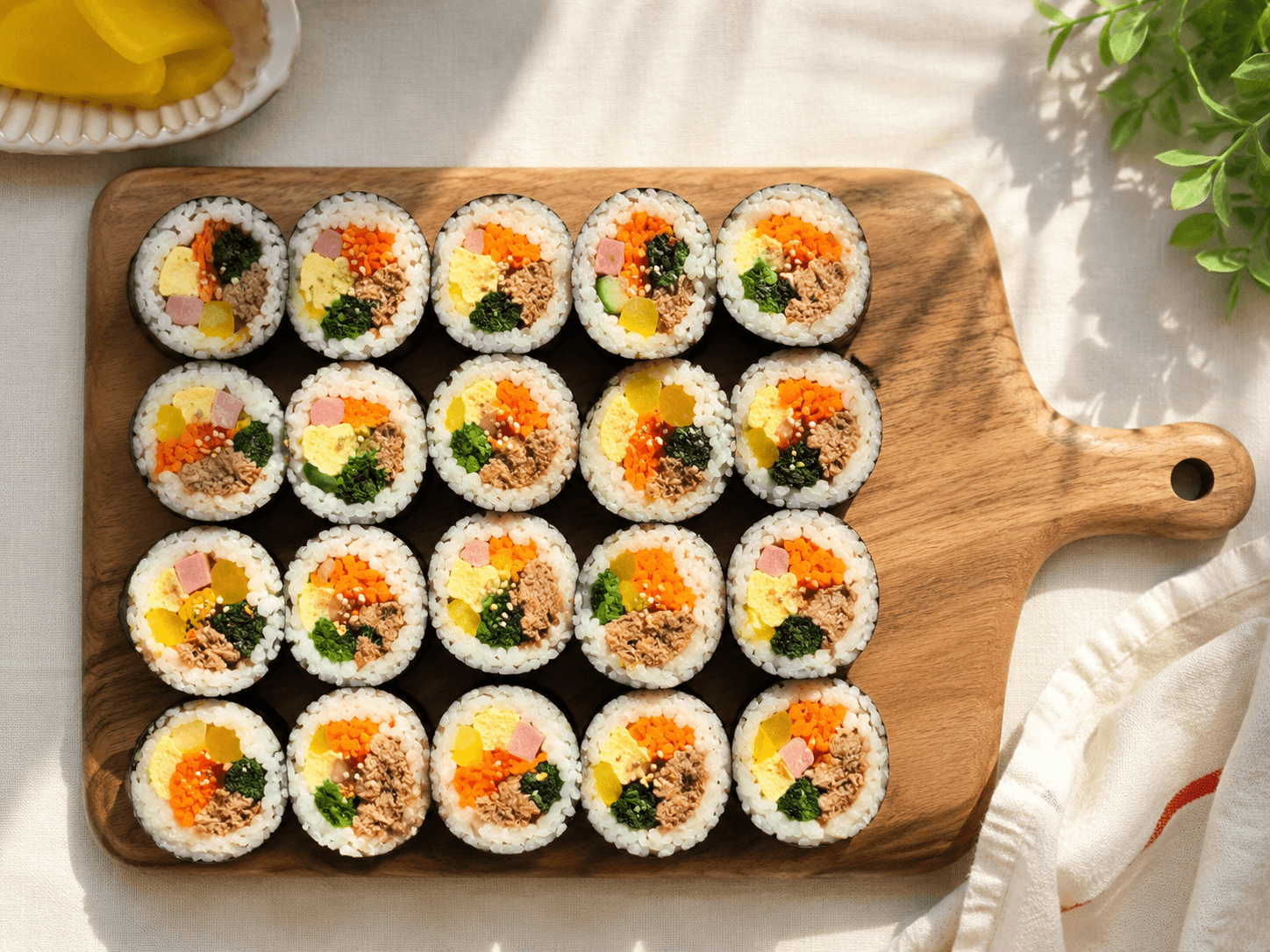
On days when the morning sunlight streams in through the kitchen window, I take out my cutting board and make kimbap.
How to Make GimbapIf you've been wondering about this, this one article is all you need.
From the ingredients to rolling techniques, and even the small mistakes that can ruin your gimbap—we’ve covered it all here.
All you need is one fish net, and it's okay if you don't even have that.
Above all A dish that combines a variety of vegetables in a single serving of rice, It’s a simple yet satisfying meal.
What exactly is kimbap?
Gimbap (gim + bap) is, quite literally, Kimand RiceIt is a dish made by rolling seasoned rice and fillings in dried seaweed and cutting it into bite-sized pieces.
Koreans take kimbap with them on hiking trails, to school, and on long train rides.
It's a simple yet delicious and healthy dish. Plus, you don't need any special sauces to go with it.
The greatest appeal of kimbap is Include a variety of vegetables in each serving of riceis the point.
You can fit carrots, spinach, and cucumbers all in one bite, and you can also use a variety of other ingredients.
I season it with just sesame oil and salt to keep it from being too greasy.
It’s a simple, healthy meal that anyone can make as long as they have the ingredients.
Ingredients (Serves 2–3, 3 lines)
Basic — 2 bowls of warm rice, 3 sheets of seaweed for gimbap, Sesame oil 1 tablespoon, ½ teaspoon salt
Basic Ingredients — Carrots, spinach, pickled radish, eggs, imitation crab or ham, cucumbers
Selection — Bulgogi, tuna mayo, cheese, kimchi — Kimbap goes with just about anything
A few honest notes before reading the book:
Pickled RadishThis is the one ingredient I’d recommend not leaving out. It’s what gives kimbap its signature crunch and tangy flavor.
When seasoning the rice Not hot, but warm It should be about that much.
Feel free to use as many of your favorite vegetables as you like. Kimbap is an endlessly generous dish—that’s its quiet charm.
Tuna & Mayonnaise—Highly Recommended!
Step-by-Step Guide
1. Seasoning the Rice
With warm rice Sesame oil and saltAdd it and mix. Toss gently so the rice grains don’t get crushed. Once the nutty aroma of sesame oil fills the kitchen, you’re ready to begin. Let the rice cool to body temperature—if it’s too hot, the seaweed will tear.
2. Preparing the Filling
Slice the carrots into thin strips and sauté them briefly. Blanch the spinach, squeeze out the excess water, and toss with sesame oil and salt. Make a thin omelet, cut it into long strips, and set aside. Cut the pickled radish and cucumber into long strips and set them aside.
3. Laying out the Kim
Place a sheet of nori on the nori mat With the shiny side facing down Posting about the shop. Food below 2/3Spread the filling thinly and evenly over the sheet, leaving the top third empty. This empty section is where you’ll seal the gimbap.Tip: Lightly wet your hands before spreading the rice. This will prevent the rice from sticking to your hands, allowing you to spread it thinly.
4. Upload and Done
Arrange the filling neatly in a single row about one-third of the way up from the bottom of the rice. Lift the nori mat from the bottom, wrap it tightly around the filling, and roll it forward — Firm, but not crumbly. The empty space at the top serves as the seam.
5. Slicing
Lightly brush the surface with sesame oil to give it a glossy sheen. Wipe the knife with a damp cloth as you slice it into 1.5 cm-thick pieces.
A clean knife lightly coated with oil is the secret to keeping the cross-section from getting squashed.
Mistakes Everyone Makes (and How to Avoid Them)
The first time you make gimbap, it usually falls apart for the same reason:
There's too much rice. Thick rice pushes against the inside and causes the seams to burst. Thin is the way to go.
Hot rice.The seaweed will become soggy and tear easily. Let it cool first.
I put in too much filling. Three or four of them dry out nicely, but eight of them burst. You need to trim it to make the cross-section neat.
A dry knife. If you don't wipe the knife clean after each use, the rice will stick and clump together.
🫡Finally,
Once you try making it, you'll see how easy and delicious it is—there's no other dish that's this healthy despite being so simple.
There’s a good reason why Koreans love gimbap.
There are so many varieties~ Tuna gimbap, fish cake gimbap, tonkatsu gimbap, and more. Try making your own new kinds of gimbap by adding your favorite side dishes~
Be sure to try rolling one this weekend.