Travel
When Should You Visit Korea? — This Chart Has All the Answers
When traveling in Korea, cherry blossoms last exactly one week, fall foliage lasts three weeks, and there’s one month you should avoid.
Hello~!
Today, I’m going to put an end to the question, “What month is the best time to visit Korea?” once and for all.
To get straight to the point: The answer with the lowest probability of failure is April and OctoberThat is.
However, since the best choice varies depending on the specific purpose—such as cherry blossoms, the ocean, or skiing—I’ve compiled a table comparing all 12 months.
⭐ Let’s get straight to the point—a 12-month comparison chart at a glance
First, I'll lay out the full map and get started.
The table below is the backbone of this article.
Month | Weather | Top Attractions and Events | One-Line Assessment |
|---|---|---|---|
January | Extreme Cold, Dry Conditions | Hwacheon Mountain Trout Festival, Skiing and Snow Flowers | Perfect for winter activities |
February | Cold Weather Persists, a Wild Card for the Lunar New Year Holiday | Ski Season Winds Down; Plum Blossoms Begin to Bloom in the South | Enjoying a Quiet Winter |
March | Temperatures Are Rising, but Late-Spring Cold Snaps and Yellow Dust Persist | Gwangyang Plum Blossoms, Gurye Cornelian Cherries, Jeju Rapeseed Flowers | Spring Flowers Advance Party |
April | Clear and mild ⭐ | Cherry Blossoms at Their Peak: The Jinhae Naval Port Festival | The Best Month ① |
May | Early Summer Greenery | Lantern Festival, Rose and Green Tea Fields | The Best Time for Outdoor Activities |
June | Pleasant weather in the first half of the month; the rainy season begins in the second half | Jeju Hydrangeas | If you just aim for the first half of the month, it's a piece of cake |
July | Rainy Season and Heat Wave | Daegu Chicken and Beer, Boryeong Mud Festival (late in the month) | Not recommended unless it's for the festival |
August | Peak Season for Heat Waves and Vacations | Beaches, Busan Sea Festival | Only when the ocean is the destination |
September | Late Summer Heat → Cooler Weather: A Wild Card for Chuseok | The Silver Grass Season Begins | Sharp rise starting in the second half of the month |
October | Clear and cool ⭐ | Autumn Foliage, Fireworks Festival, and Busan International Film Festival | The Best Month ② |
November | Chilly, off-season for tourism | Late Fall Foliage · Ginkgo Trees | Quiet and affordable |
December | The Heart of Winter | Lanterns and Illuminations, Ski Season Opens | End-of-Year Vibes |
The festival dates change slightly each year.
The final schedule is provided by the Korea Tourism Organization Festival Calendar: Every Corner of South Korea(English is VisitKorea) is the most accurate way to check.
Korea, with its four distinct seasons—the scenery changes completely every month
🌸 Spring (March–May) — Flowers begin to bloom in the south
Spring flowers start blooming in the far south and make their way north to Seoul.
As long as you know this sequence, even if you miss the blooming season, you can catch up by moving to a region one level higher.
March — Plum Blossoms, Cornelian Cherry Blossoms, and Rapeseed Flowers
Although winter is coming to an end, there are still some late-winter cold snaps, so it’s best to dress as you would in winter.
The Gwangyang Plum Blossom Festival (usually held in mid-March), the Gurye Cornelian Cherry Festival (mid- to late March), and the Jeju rapeseed flower fields are the highlights of this month.
However, March through May is also a time when yellow dust and fine particulate matter are common.
Before your outdoor activities Air KoreaWe recommend making it a habit to check the air quality there!
Mid-March in Gwangyang’s Plum Blossom Village — The Opening Act of Korea’s Spring Blooms
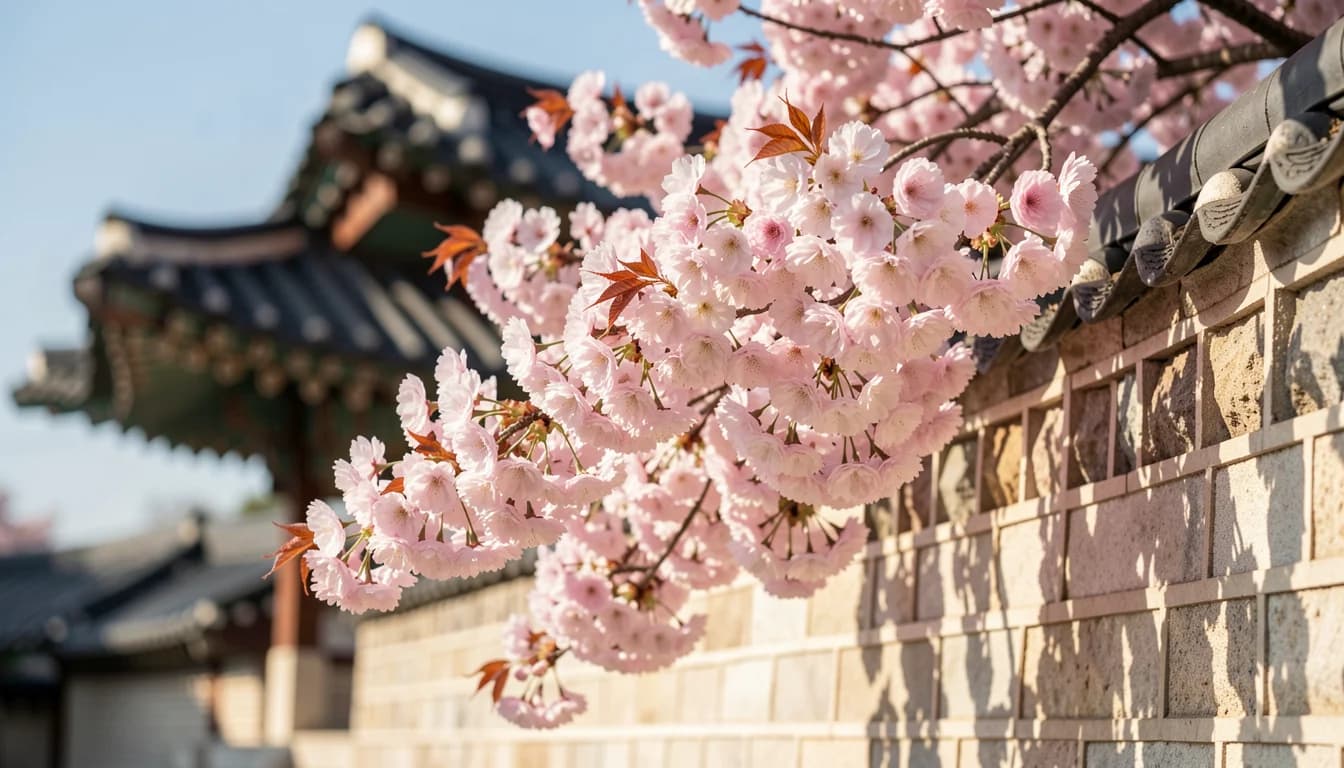
April — Peak cherry blossom season, the best month of the year
The usual pattern is for Busan and South Gyeongsang Province to reach full bloom in late March through early April, and for Seoul to do so in early April.
The problem is that from the time they bloom until they wither, Just a little over a weekThat is to say.
Korea's largest cherry blossom festival, Jinhae Naval Festival(Changwon, typically late March to early April), along with Yoonjung-ro in Yeouido, Seoul, and the Bomun Complex in Gyeongju, are considered the three major attractions.
Yoonjung-ro in Yeouido in early April — the peak blooming period lasts just over a week
May — The Month of Fresh Greenery and Lanterns
Judging by the weather, May is just as nice as April.
The highlight is the Lantern Festival parade (a UNESCO Intangible Cultural Heritage of Humanity) that fills downtown Seoul the weekend just before Buddha’s Birthday, and the green tea fields in Boseong and the rose garden at Everland are also at their peak during this time.
However, during the Children’s Day holiday in early May, tourist attractions and accommodations tend to be crowded with domestic family travelers.
The Lantern Festival on the Weekend Before Buddha’s Birthday — A Spectacular Sight on a May Night
🌊 Summer (June–August) — If you know about the rainy season, you’re halfway there
The key to success this summer is managing weather risks.
Rain all summer longIt’s easy to think that, but the actual pattern is divided into “the rainy season from late June to late July + heat waves and typhoons in August.”
June — The First Half of the Month Is the Hidden Honey Season
Based on past trends, the rainy season typically begins in mid-to-late June in Jeju and in late June in the central region.
To put it another way, early to mid-June is a niche season—it’s neither too hot nor peak season!
Hydrangeas in Jeju are in full bloom around this time.
Jeju's Hydrangea Trail in June — At Its Peak Just Before the Rainy Season
July — The Month of the Rainy Season, But There Are Festivals, Too
While putting this together, I came across a fact that surprised even me—apparently, out of the one-month monsoon season, it actually rains on only about 15 to 20 days (according to statistics from the Korea Meteorological Administration).
If you mix in some indoor activities just in case it rains, July will go by just fine.That's what it means.
In fact, the festival is a huge success.
Following the Daegu Chicken and Beer Festival (usually held in early July), the summer festival most frequently visited by foreigners in Korea is Boryeong Mud FestivalIt will be held in the latter half of the month — According to the official schedule, the 2026 event will take place from July 24 to August 9 at Daecheon Beach (Official Website).
Boryeong Mud Festival — Korea’s Premier Summer Festival Where Everyone Has Fun with Mud
August — Heat Wave and Peak Season; Only When Traveling to the Beach
This is the month when the midsummer heatwave and tropical nights coincide with the peak travel season—late July through early August—when many Koreans take their vacations.
It's great if you're planning to visit beaches or water parks, but this is the toughest time of year for city sightseeing.
Since typhoons may affect your plans in August and September, please allow for some flexibility in your schedule.
Haeundae in August — Peak Season, Coinciding with the Korean Vacation Season
🍁 Fall (September–November) — Fall foliage spreads from north to south
Unlike spring flowers, The fall foliage begins in the northern part of Mount Seorak and spreads southward..
Based on past years, peak season is mid-October at Seoraksan → late October in Seoul and Gyeongju → and early November in the southern regions, including Naejangsan, and on Jeju Island.
If you just follow this schedule, you can spend more than three weeks chasing the fall foliage.
September — Sharp rise starting in the latter half of the month
Although the late-summer heat lingers in the first half of the month, the weather turns clear and pleasant starting in the second half.
One variable is the Chuseok holiday—which falls on the 15th day of the eighth lunar month and therefore occurs between late September and early October each year (see the “Notes” section below).
Silver Grass at Seoul Sky Park in Late September — A Preview of Fall
October — The Most Colorful Month of the Year
The weather, fall foliage, and events are all at their peak.
In particular, The first week of OctoberN Seoul World Fireworks Festival (Yeouido, typically held from late September to early October), Busan International Film Festival(Early October) is packed with events, including the Jinju Namgang Lantern Festival and the Andong International Mask Dance Festival.
Are you saying all of this is in the same state?
That's why accommodations in Seoul and Busan sell out quickly.
When planning a trip in October, the first step is to book your accommodations!
Mid-October on Mount Seorak — The Starting Point for Fall Foliage in Korea
November — A Quiet and Affordable Late Fall
The late autumn foliage in the south and the yellow ginkgo-lined streets last until early November, after which it’s the off-season for tourism, so flights and accommodations tend to be less crowded.
If you want to stroll through the royal palace without the crowds, the moon is an unexpected answer.
Ginkgo Alley in Early November — The Last of the Fall Foliage
⛄ Winter (December–February) — It’s cold, but that’s why there’s plenty to do
Winters in Korea are really cold.
There are days when the temperature in Seoul drops below minus 10 degrees.
Instead, the activities made possible by this cold weather—ice fishing, skiing, and snowflakes—are only available in winter.
December — Holiday Lights and the Start of the Ski Season
Ski resorts are opening, and the Light Lantern Festival and Christmas illuminations are lighting up downtown Seoul.
It's the best time of the year for that end-of-year atmosphere.
Seoul's Night Streets in December — The Year-End Illumination Season
January — The Height of Winter Activities
The height of winter.
Fishing for trout on a frozen river Hwacheon Mountain Trout Festival(Official Website(held in January as usual) is the premier winter festival, and this is also the peak season for skiing at resorts in the Pyeongchang and Gangwon regions, as well as for snow-covered hikes on Mount Deogyu and Mount Halla.
January Hwacheon Mountain Trout Festival — Ice fishing is a symbol of winter in Korea
February — The End of Winter, a Preview of Spring
Toward the end of the ski season, around the end of the month, plum blossoms begin to bloom first in Jeju and along the southern coast.
Although it’s a quiet month between winter and spring, the Lunar New Year holiday often falls during this month.
Ski Resorts in the Gangwon Region in February — Snow Conditions Last Until the End of the Season
☔ A Complete Guide to Times to Avoid or Be Cautious Of
Just as important as choosing the right month is the risk calendar.
Avoiding just this one thing can make all the difference in your travel satisfaction.
Risk | Time | What's the problem? | Response |
|---|---|---|---|
Rainy Season | Late June–Late July | Humid with frequent rain | Mix indoor and outdoor activities; keep an umbrella handy |
Typhoon | Focus on August–September | Flight and Ferry Cancellations Possible | Korea Meteorological Administration Confirmation, schedule flexibility |
Heat Wave | Late July–August | A group of tourists sightseeing outdoors at midday | Routes Focused on Morning and Evening |
Lunar New Year and Chuseok Holidays | Between January and February / Between September and October | Store Closures and Massive Traffic Movements | Check the holiday dates in advance |
Yellow Dust and Fine Particulate Matter | Frequent occurrences from March through May | Decline in the Quality of Outdoor Activities and Photography | Air Korea Check |
Lunar New Year and Chuseok are Based on the lunar calendarSo the date changes every year.
Since many markets and small restaurants are closed around the holiday, and train tickets sell out quickly, be sure to check whether your travel dates coincide with the holiday.
However, national and public facilities such as palaces and museums are often open, so sightseeing in the city center is still possible.
The rainy season from late June through July — Avoid it, or plan indoor activities instead
✨ Final Recommendations by Purpose
Finally, here is a matching chart for those who say, "This is my goal."
Purpose | Optimal Time | Key Points |
|---|---|---|
Cherry Blossoms | Late March (in the south) to early April (in Seoul) | Peak Week: Flowering Forecast a Must |
Autumn Foliage | Mid-October (Seorak) to early November (southern regions) | Pursuit is possible in the order North → South |
Beach & Water Activities | Late July–August | Be Prepared for the Peak Season; Book Your Accommodations in Advance |
Skiing and Snow | Mid-December to mid-February | January is the peak of winter |
Festival Roundup | The first week of October | Focus on Fireworks, Film Festivals, and Lanterns |
Quiet + Great Value | Early June, November, February | Off-season—just avoid the Lunar New Year holiday |
Stable Weather | April, October | Lowest Probability of Failure |
Pre-Departure Checklist:
Check the Confirmed Schedule for the Travel Moon Festival — Festival Calendar: Every Nook and Cranny
Check if it overlaps with the Lunar New Year or Chuseok holidays (dates vary each year because they are based on the lunar calendar)
For cherry blossoms and fall foliage, check the bloom and foliage forecasts and adjust your destination accordingly.
Indoor "Plan B" for Rain and Typhoons from June to September
Book accommodations in advance for April, October, and holiday seasons
No matter what month you visit, the night view is available year-round
A country where there's always something to see —
If you're still unsure,
The answer is either April or October.