Korean Food
Soy-Marinated Crab: Using Rock Crabs Instead of Flower Crabs — A Guide to Boryeong Stone Crabs
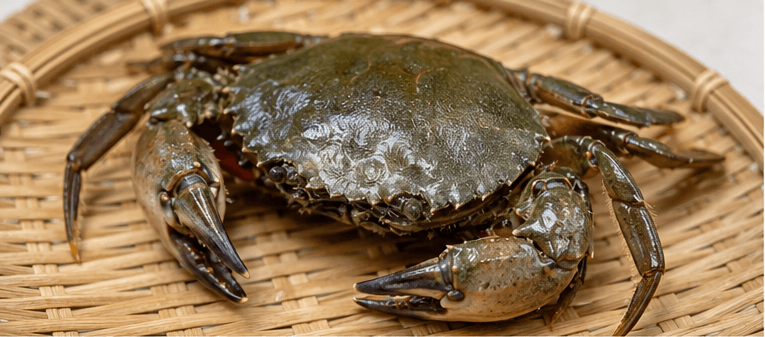
Stone on the Outside, a Delicacy on the Inside — The True Nature of the Stone Crab and the Box Crab
At a glance
This guide compares the differences between flower crabs and rock crabs (also known as “dolge” or “bakhaji”) in a single chart, and includes instructions for making rock crab sauce using a 4:6 soy sauce ratio, as well as tips for ordering direct from the source at Daecheon Port in Boryeong.
Hello.
Today, we’re featuring a little “meal-stealer” from the seas off Boryeong, South Chungcheong Province: the rock crab.
To cut to the chase: If you're going to make soy-marinated crab at home, rock crabs are the way to go—not the more expensive flower crabs.
In this post, I’ll cover everything from the differences between flower crabs and other types of crabs, to the proper order for marinating crab in soy sauce, and even tips on whether to buy them locally in Boryeong or have them shipped.
🦀 Min-kkot-ge, Dol-ge, and Bak-ha-ji—they’re all the same crab
It's a bit confusing because there are several names, but they're all the same guy.
Its standard name is min-kkotge, and it belongs to the same crab family (Portunidae) as the flower crab.
Name | Identity |
|---|---|
Min-kkotge (Rock Crab) | Standard Name — Flower Crab Family (Portunidae); Common along the coasts of the West Sea and South Sea |
Dol-ge (Stone Crab) | Nickname — A name derived from its shell being as hard as a rock |
Bak-ha-ji | A dialect spoken on the west coast (in South Chungcheong Province) |
Beol-tteok-ge (Mud Crab) | A name from the southern coast—that’s where “Beol-tteok Gejang” comes from~ |
In the market, they are more commonly found under the names "dolge" and "bakhaji."
🔍 Blue Crab vs. Rock Crab — How to Tell Them Apart in 30 Seconds
When you're confused at the market, there's only one place to look: the side spines.
If the left and right sides of the shell extend sharply, it's a flower crab; if the shell is round, smooth, and without spines, it's a rock crab.
Category | Blue Crab | Rock Crab (Stone Crab) |
|---|---|---|
Next to the shell | Thorns that are pointed on both sides | Smooth and thornless |
Size | About the size of an adult's palm | About 6 cm wide, less than half |
Shell | Relatively easy to prepare | Very Hard — The Origin of "Dolge" |
Pincers | Long and sleek | Short, thick, and sturdy |
In Season | Female crabs in spring · Male crabs in fall | Spring to fall—they say fall produce is the best. |
Primary Use | Steamed Dishes, Stews, and Spicy Marinated Blue Crab | Spicy Crab (Stone Crab) · Soybean Paste Soup |
Price Range | Relatively high price | Much cheaper than blue crabs |
Prices fluctuate depending on the season and crop conditions — Check the market before purchasing
The blue crab on the left has sharp spines on its sides, while the common crab on the right has rounded ones.
Since it's so thin, it's easy to assume it must be a lower-grade one, but when it comes to gejang, it's a whole different story.
Their shells are hard, so they hold up well even when marinated in soy sauce for a long time, and despite their small size, they have a rich, savory flavor.
You can generally assume that most crab-based set meals, which are noticeably cheaper than flower crab marinate, are this stone crab marinate.
🥢 How to Make Soy-Marinated Crab with Stone Crab
Let's start with the key ratios.
A soy sauce to water ratio of around 4:6 works well (3:7 to 5:5, depending on the recipe).
All you have to do is add the aromatic herbs, bring it to a boil to make the "braising sauce," let it cool completely, and then pour it in.
Ingredients | Yang | Notes |
|---|---|---|
Rock Crab | Per 1 kg | Live Crab or Flash-Frozen — Freshness Is Half the Taste |
Soy sauce : Water | Around 4:6 | Enough to completely submerge the crab |
Herbs | Onions, green onions, garlic, ginger | Adding apples or pears gives it a subtle sweetness |
Spices | Whole Black Peppercorns, Bay Leaves | If you add dried Cheongyang chili peppers, it’ll be spicy. |
Selection | Soju and Plum Syrup | Eliminating Fishy Odors + Enhancing Umami |
If you're not sure how much soy sauce to use, this is a really great tip!
First, place the prepared crabs in a container and pour in enough bottled water to cover them.
If you make just that much braising sauce, you’ll have neither too much nor too little.
Soy sauce simmered with aromatic herbs — Be sure to let it cool before using
Preparation — Using a brush, thoroughly scrub every nook and cranny of the shell and between the legs, lift the belly flap to remove any debris, and then pat it dry.
Reduced Soy Sauce — Add soy sauce, water, herbs, and spices, and simmer for about 10 minutes. Just before turning off the heat, add soju and plum syrup.
Cooling — Let it cool completely. If you rush this step, you’ll end up with steamed crab instead of marinated crab.
Pouring — Place the crabs in an airtight container with their bellies facing up, and pour in the cooled soy sauce until the crabs are submerged. Press them down with a plate to keep them from floating.
Simmering — After 2–3 days, pour off the soy sauce, bring it to a boil, let it cool, and pour it back in. Repeat this 1–2 times, and it will be ready to eat starting on the 4th or 5th day.
Cleaning Brush
Airtight container (or kimchi-making plastic bag)
Simmering Pot
Pressing Plate
Zipper Bags for Portioning (for Freezer Storage)
🚚 Boryeong Daecheon Port — Buy Directly from the Source and Have It Shipped to You
The easiest place to find rock crabs in Boryeong is the Daecheon Port Seafood Market.
The modernized market next to the passenger terminal and the traditional fish market next to the Fisheries Cooperative auction hall are located side by side.
Item | Content |
|---|---|
Location | 334 Daecheon-hang-ro, Boryeong-si, South Chungcheong Province (Sinheuk-dong) |
Contents | About 70 live fish and seafood vendors on the first floor + dried seafood; restaurant area on the second floor |
Sales | Usually 8:00 a.m. to 9:00 p.m. — Varies by store |
Parcel Delivery | A significant number of stores offer nationwide delivery |
First Floor of Daecheon Harbor Seafood Market — About 70 shops selling live fish and shellfish
If you can't go because it's too far, shipping is the answer.
If you keep just a few things in mind, your chances of failure will drop significantly.
It may not arrive alive — First, contact the store to find out if they can ship live crabs, and if not, whether they can ship them flash-frozen.
Be especially careful in the summer — We usually ship using Styrofoam and ice, but during hot weather, it’s safer to check whether the destination is a next-day delivery area.
Process immediately upon receipt — Either marinate the crab in soy sauce on the day of arrival, or clean it and freeze it right away.
For exact prices and shipping terms, check with the Daecheon Port Seafood Market’s official channels or individual stores.
By the way, in addition to Daecheon Port, Boryeong is home to Muchangpo Port and Ocheon Port—famous for its comb pen shells (kijogae)—so it’s fun to choose which one to visit depending on the season.
✨ 3-Line Summary
A Platter of Spicy Crab — The Traditional Way Is to Mix Rice with the Crab Shell
If there are no spines on the side of the shell, it’s a rock crab (also known as a stone crab or Bakhaji)—small but with a shell as hard as stone and a rich, savory flavor.
For making gejang, It offers better value for the money than blue crabs. — Boil in a 4:6 ratio of soy sauce to water, let cool, then pour over the ingredients; repeat the steeping process 1–2 times.
Source: Daecheon Port, Boryeong — You can either go there in person or have it delivered nationwide via courier.
The shell is like a rock, but the inside is irresistible.
How this article was prepared
Sources checked
- dcharbor.com 참고 자료— 본문에서 안내한 참고 링크
Related reading
Watermelon: Everything You Need to Know in One Article — From Variety Comparisons to Milk Ice Cream
From a comparison chart of sugar content by variety—including Apple, Black Mango, and Black-skinned watermelons—to tips on how to choose them based on stripes and the “belly button,” plus recipes for whole watermelon milk ice cream and fruit punch—we’ve covered everything you need to know about watermelons this summer in one article.
The Ultimate Guide to Korean BBQ — From Grill Types to Cuts of Meat
From the differences between charcoal, briquettes, and pot-lid grills to a chart of meat cuts like samgyeopsal, hangjeongsal, and chadolbagi, plus the proper way to order a single serving and how to wrap meat in lettuce—the ultimate K-BBQ guide to mastering your first visit to a Korean barbecue restaurant.
Easy Homemade Kimchi! A Complete Guide to Korean Quick-Pickled Napa Cabbage — Just Pickle and Season, and You’re Done
Thirty minutes to brine, five to dress — mild napa geotjeori broken down into exact ingredient ratios and three steps, with a milder seasoning mix, brining pitfalls to avoid, and dishes to pair it with.