Living in Korea
YouTube Course Scams: Avoid Them If You See This Pattern — A Complete Guide to Tactics, How to Spot Them, and Refunds
If someone knows how to make 10 million won a month, why would they sell that method for money?
At a glance
A breakdown of the classic '10 million won a month in passive income' course-seller playbook — with a comparison table for telling trustworthy courses apart, plus post-payment refund procedures and agency contacts.
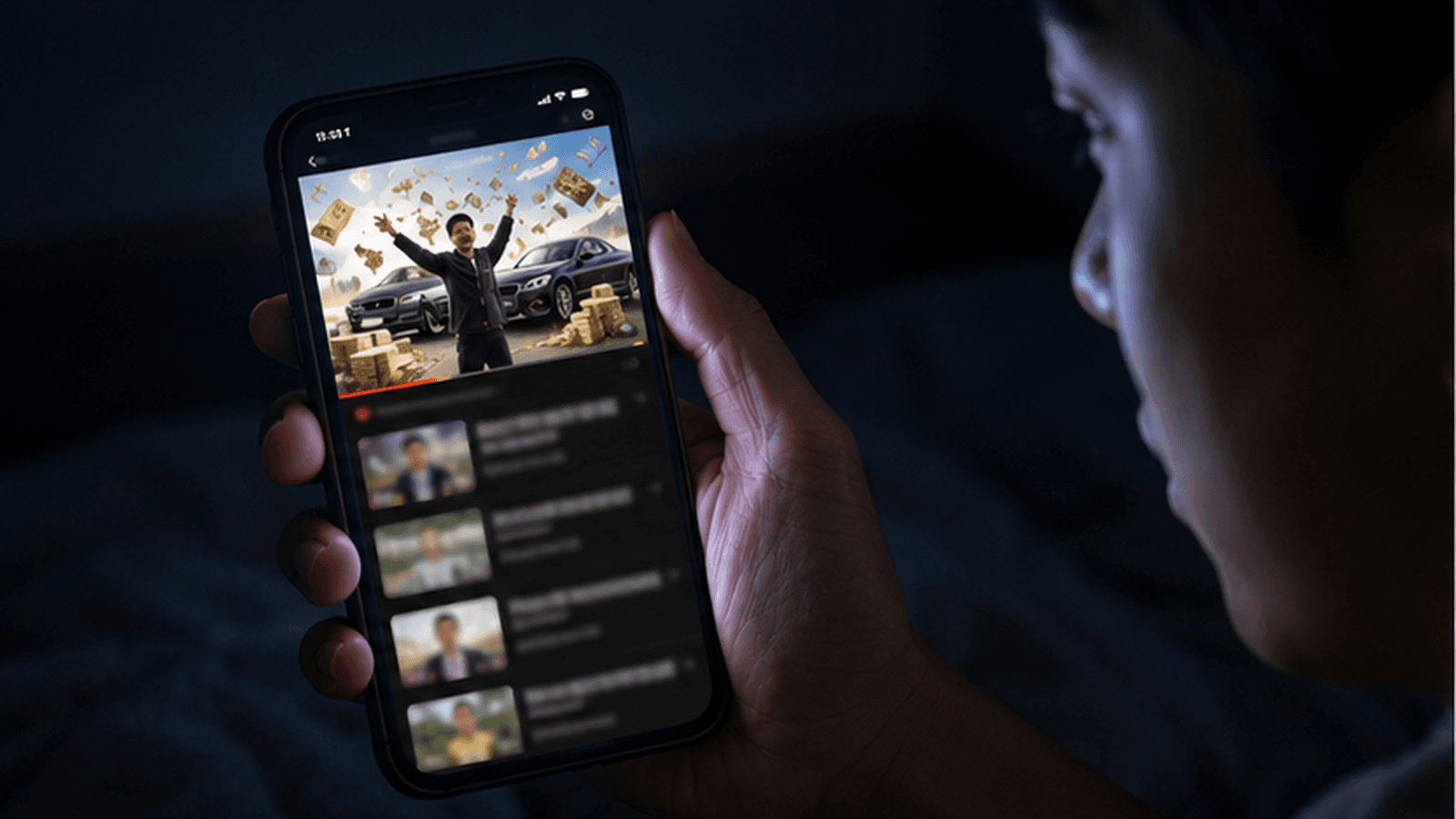
"10 million won in passive income per month," "Achieve financial freedom by starting a business with no capital."
Once the YouTube algorithm latches onto something like this, videos like it just keep popping up endlessly.
The problem is that this isn't just hot air, but a well-designed sales funnel.
According to the Korea Consumer Agency, applications for relief from damages related to high-cost online side-job courses have surged since 2024 and payment amounts most often fell in the 1 million to 4 million won range.
Let's cover everything in this single post—from patterns to identification methods to what to do if you've already paid.
The algorithm knows when you're wavering
🎣 1. Sales Funnel — Free Videos Are Just Bait
Course-peddling isn't improvised; it's a step-by-step design.
It’s a model that starts with free content and gradually increases the amount users pay, and once you understand the flow, you can see at what point users are likely to open their wallets.
Step | Appearance | Actual Purpose |
|---|---|---|
① Free Videos and Shorts | "How to Make 1,000 a Month Revealed" | Algorithm Exposure, Building Trust |
② Free Special Lectures and E-books | "First come, first served," Open Chat Invitation | Collecting Contact Information, Creating a Sense of Obligation |
③ Paid Courses | in the hundreds of thousands of won | Starting to Make Real Money |
④ High-Priced Coaching and the “Cohort System” | VIP and Select Groups in the Millions of Won | The Real Goal — Maximizing Average Revenue Per Customer |
⑤ Recruiting Sales Representatives | "You Should Sell This Lecture, Too" | Converting Students into Sales Representatives |
Inviting people to an open chat is the second step of the funnel.
If you get to step ⑤, it’s not about the lecture content, but rather the recruitment structure itself becomes the product.
If the structure involves recruiting sub-salespeople who then recruit others, some in the legal community have pointed out that it could amount to unregistered multi-level marketing under the Door-to-Door Sales Act.
🔍 2. The Trick Behind Profit Verification — Why Can’t We Trust Those Numbers?
Profit verification is what keeps the funnel turning.
However, there is a common vulnerability in the authentication method itself.
Common Authentication | Why can't you believe it? |
|---|---|
A screenshot of a single line from a bank account deposit history | Can be manipulated through transfers between acquaintances; revenue ≠ net income |
Store and AdSense Dashboards | A Revenue Chart That Excludes Advertising Costs, Production Costs, and Refunds |
Luxury Goods, Hotels, and Supercars | With rentals and staging, you can set it up in a day |
Student Success Stories | There have been cases where the offer came with the condition that "you'll receive a partial cashback if you write a positive review." |
In fact, as the controversy over “success-peddling” grew, a movement emerged where viewers demanded HomeTax income certificates, and there have even been media reports about YouTubers who quietly disappeared after facing verification.
A one-line screenshot is not proof—it's staged.
✅ 3. Comparison Chart — Reliable Courses vs. Course Scams
Not all paid courses are scams.
There are definitely some good lectures.
The differences lie in the following six categories—let’s apply them to this table before making a payment.
Criteria | Reliable Lectures | Course Scams |
|---|---|---|
Profit Claim | Mention of the process, difficulty, and likelihood of failure | "For Everyone · Automatic · Guaranteed" |
A Lecturer's Main Job | Achievements in that field were found through searches outside the course. | The only source of revenue is lecture sales |
Price | Public from the start | Will be revealed after the special lecture ends + "Today Only Discount" |
Curriculum | Table of Contents and Length Revealed | "You'll see once you come in." |
Refund Policy | As specified in the terms and conditions | Ambiguous or "non-refundable" clauses |
Payment Methods | Official Platform and Card Payments | In the open chat Inducing a Bank Transfer |
If the timer starts running, be suspicious right away
💰 4. If you've already paid — Here's how to get a refund
Just because you've paid doesn't mean it's over.
There are more legal avenues available than you might think.
The general framework is as follows, but since it varies depending on individual terms and circumstances, an accurate assessment should be confirmed through a consultation with the 1372 Consumer Counseling Center.
Situation | Basis | Key Points |
|---|---|---|
Within 7 days of payment | Right of Withdrawal Under the E-Commerce Act | You can withdraw (cancel) your order before the content is made available. |
They say, "Since it's digital content, refunds aren't possible," but | The same law | If the business clearly stated in advance that returns were not accepted and did not take measures such as offering a sample, there may be grounds for a dispute. |
Fixed-term courses lasting one month or longer | Termination of an Ongoing Business Relationship (Korea Fair Trade Commission Rectification Case) | Early cancellation is allowed; you can request a refund for unused sessions. |
Specific terms vary depending on the type of contract — check with 1372
If your refund request is denied, just follow the steps in order.
① Gathering Evidence (Payment history, ad screenshots, chat screenshots, audio recordings) → ② Demand for a refund via certified mail or in writing → ③ Reporting to an agency.
Organization | When | Contact |
|---|---|---|
1372 Consumer Counseling Center | Initial Consultation, Referral for Remedies | |
Korea Consumer Agency | Remedies and Dispute Resolution | |
Content Dispute Mediation Committee | Online Content Dispute Mediation | |
Fair Trade Commission | Report False or Exaggerated Advertising |
A refund dispute is a battle of evidence.
✨ 5. 30-Second Checklist Before Checkout
If you don't have time to look at the table, just read this.
If even one thing holds you back, put off the payment—a good course isn’t going anywhere.
Is the instructor's track record found through searches outside of course sales?
Are the price, curriculum, and refund policy disclosed before payment?
Is it free of income-guarantee phrases like "Anyone, Automatic, Guaranteed"?
Is this an official payment method, rather than a bank transfer via Open Chat?
Is this a course worth taking even without the "Just for Today" timer?
People who know the real secret use it to make money—they don’t sell it.
There’s no need to stop learning altogether.
However, whether the tuition is an investment in my own growth or an offering toward someone else's earnings proof is what gets decided at the payment button.
The three tables in this article are more than enough to make that judgment.
How this article was prepared
Sources checked
- ccn.go.kr 참고 자료Linked page is in Korean— 본문에서 안내한 참고 링크
- kca.go.kr 참고 자료Linked page is in Korean— 본문에서 안내한 참고 링크
- kcdrc.kr 참고 자료Linked page is in Korean— 본문에서 안내한 참고 링크
- ftc.go.kr 참고 자료Linked page is in Korean— 본문에서 안내한 참고 링크