Korean Food
What Makes Greensys Pears Different? — A Complete Guide to the Features and How to Buy the New "Cheongbae" Variety
Crisp and fresh, right down to the green skin—a new domestic pear variety with no stone cells that’s perfect for a quick snack
At a glance
Ta-da! Ta-da-da! A green pear has made its appearance—!! Hey, you there—did you just say, “Aren’t all pears yellow?” Today’s star is GreenSis—a new domestic pear variety with a light green skin. How is it different from the brown Shin-go pear? Where and how can you buy it? This post has all the answers. READY?
Ta-da! Ta-da-da! A green pear has appeared—!! Hey, you there—didn’t you just say, “Aren’t all pears yellow?” 🍐 Today's featured guest is GreenSys — a new domestic pear variety with light green skin. This article will tell you everything you need to know—from how it differs from the brown Shin-go pear to where and how to buy it. READY?
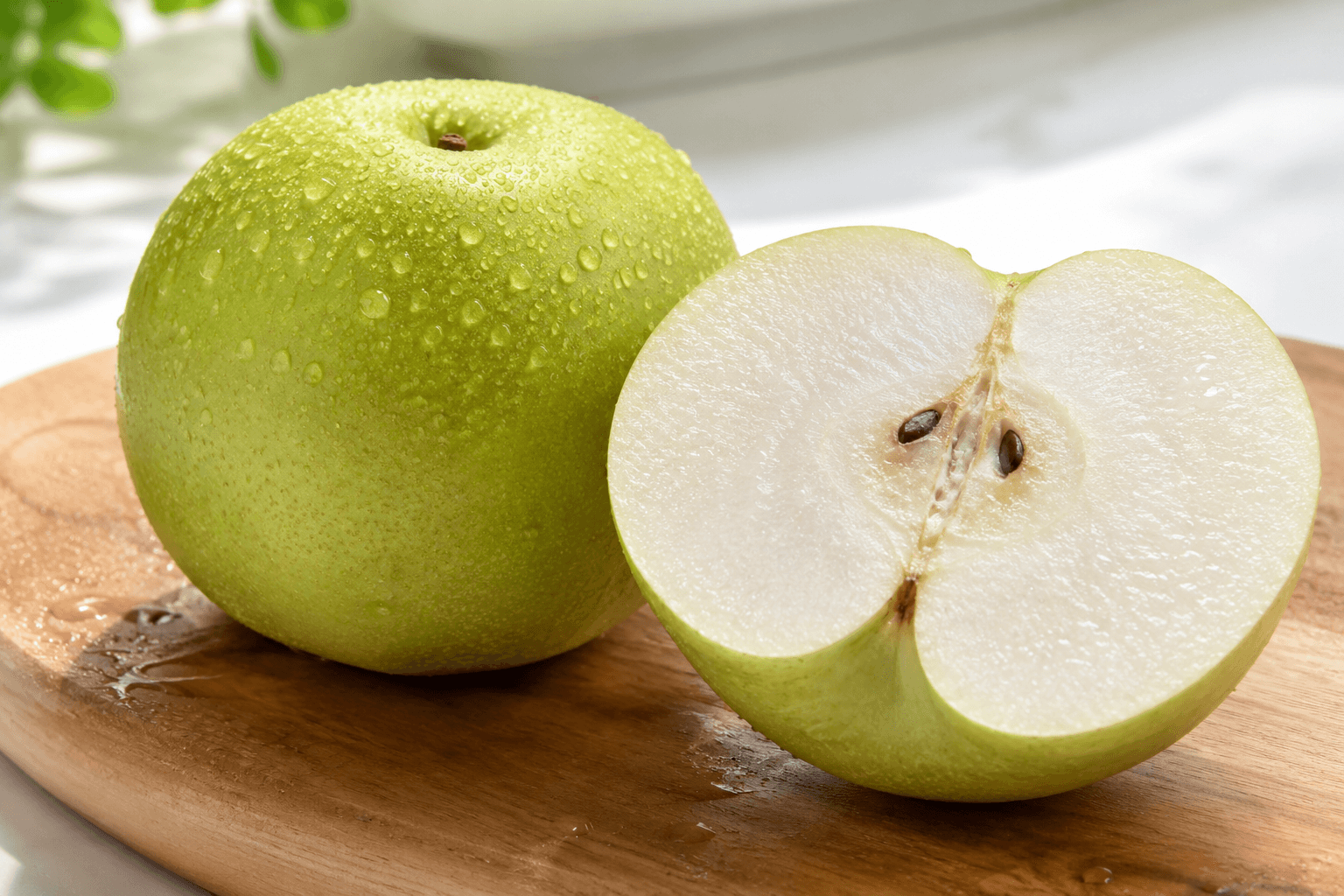
Not a yellow pear, but a green pear. This is GreenSys.
🍐 One-line description — "Domestic green pear: a fusion of Eastern and Western pears"
GreenSys is Korea's first interspecific hybrid pear, developed by the Rural Development Administration. It was created by crossing the Asian pear “Hwanggeum” with the Western pear “Bartlett.” That’s why it has such a unique appearance. It combines the crispness of the Asian pear with the tenderness of the Western pear. Exquisitely I put it on top. Even though the color is ripe, Light green — It’s what’s known as “Cheongbae.”
⭐ Let’s get straight to the point—GreenSys vs. Singo Bae: A Side-by-Side Comparison Chart
If you're in a hurry, you can just take a look at this chart and go. The foods we commonly eat Shin Go-bae I lined them up side by side.
Item | GreenSys | Shin Go-bae (for comparison) |
|---|---|---|
Shell color | Light Green (Blue-Green) | Yellowish-brown |
Weight (per fruit) | Approx. 400–460 g | Generally 600g to 1kg+ |
Sugar content | Around 12 Brix on average | Generally 11–13 Brix |
Meat texture | Soft and crunchy, Virtually no stone cells | Crunchy, with some stone cells |
with the skin on | Possible (Lightly browned and thin) | Usually peeled before eating |
Disease resistance | Resistant to black star spot disease → advantageous for eco-friendly farming | Relatively weak |
Shelf life | 50 days at room temperature / 7 months or more at low temperature | It has a relatively long shelf life |
Harvest Season | Late September (Based on Naju) | Late September–October |
I included the Shin Go-bae variety only as a "point of comparison" — the values vary depending on growing conditions.
🥗 Difference #1: Skin — Crisp and crunchy even with the skin on; no need to peel it
The greatest appeal of Greensys. with the skin on I eat them. They have very little brown spot (the brown discoloration that appears on the skin) and thin skin, so I just wash them and A bite Just take a bite. Just like an apple. GREAT!
No effort required to trim 0 — Perfect for kids' snacks and lunchboxes
Nutritional Loss ↓ — Nutrition Right Down to the Skin
Just wash it — Wash by rubbing under running water
🍽 Difference #2: Texture and Taste — It has virtually no stone cells, so it’s “soft.”
Attention, everyone who dislikes the distinctive, gritty texture (stone cells) found in pears—!! GreenSys has almost no stone cells, so the flesh is fine and tender. That’s thanks to its Bartlett pear heritage. The sugar content averages around 12 Brix, and it's very juicy, leaning sweet and refreshing.
At times like this | Why Greensys Is Great |
|---|---|
Snacks for Children and Seniors | Few stone cells A smooth sensation in the mouth |
Blended into juice or baby food | and Juicy and finely ground |
Dessert·Guest Table | If you slice it with the skin on Green border It's pretty |
🌱 Difference #3: Eco-friendly — Resistant to black star spot disease
This is a point that consumers often overlook, but it’s quite significant. Greensys is resistant to black star spot disease (also called black star disease), the biggest headache in pear farming. So it's easier to grow clean fruit even with less pesticide use, Eco-Friendly Farming It is considered a variety well-suited for this purpose.
Resilience → Minimizing the Use of Crop Protection Products Possible
Little russeting, too → smooth skin even in regular bags
❄️ Difference #4: Shelf life — Pears that last through the winter
They're harvested in the fall, so why are they so common in the winter? It's because they store well. It's said to last about 50 days at room temperature, and 7 months or more in cold storage. So even in the middle of winter, after the holidays, Fresh Green Pears You can meet them. SUPER!
💰 How to Buy — When and Where to Buy
All right, let's get down to business. I've organized the shipping season and where it's sold.
When to Buy (Seasonality and Availability)
Harvest: Late September (based on Naju; may be later depending on the region)
Distribution: Thanks to its shelf life, it's autumn~Until the middle of winter. A variety also recommended as a "winter pear"
Since the area under cultivation is not yet very large, They aren't found just anywhere, like Shin Go-bae. — I prefer doing it online.
Where to Buy (Comparison of Retailers)
Channel | Features | Notes |
|---|---|---|
Nonghyup Distribution and Hanaro Distribution | Chances of meeting in person ↑ | Availability varies by store |
Home Shopping and Large Malls | 3 kg and other household-sized quantities | GS SHOP·Hyundai Hmall etc. |
Producer Sites and Specialty Online Stores | Gift Sets · Direct from the Source | Onbricks etc. |
Naver Smart Store | Direct Sales from Local Farmers | After checking the reviews and weight |
Availability and prices vary by season and retailer — the link is for an example channel
✅ Checklist for When You Buy and Eat
Finally, here’s how to choose and enjoy without any mistakes. Be sure to take note—!!
Weight and Fruit Count Verification — Estimate the size based on the quantity indicated, such as "3 kg, 5–10 pieces"
For Home Use vs. As a Gift — The household version, which accounts for minor imperfections, offers the best value for money, while the gift version is ideal for special occasions.
When eating with the peel on Wash by rubbing under running water
Caution: Discoloration may occur after cutting — The meat is tender, so the cut surface spoils quickly; slice it just before eating.
Storage — Wrap in newspaper and store in the vegetable compartment of the refrigerator; for long-term storage, keep at a low temperature
Green · With the Skin On · Soft and Free of Stone Cells
"If you've got a yellow pear, in winter, go for the green pear, GreenSis—!!"
GreenSys in a nutshell: Domestically Produced Inter-Specific Hybrid Green Pear, It’s crisp even with the skin on, and it’s tender because it has few stone cells.
It is resistant to disease, making it ideal for organic farming, and has a long shelf life, so it’s available even in winter.
Buying is still easier online, and since prices fluctuate significantly, check the latest price at the retailer.
FINISH! 🎉
How this article was prepared
Sources checked
- rda.go.kr 참고 자료Linked page is in Korean— 본문에서 안내한 참고 링크
- m.gsshop.com 참고 자료— 본문에서 안내한 참고 링크
- m.hnsmall.com 참고 자료— 본문에서 안내한 참고 링크
- onbrix.co.kr 참고 자료Linked page is in Korean— 본문에서 안내한 참고 링크
Related reading
Watermelon: Everything You Need to Know in One Article — From Variety Comparisons to Milk Ice Cream
From a comparison chart of sugar content by variety—including Apple, Black Mango, and Black-skinned watermelons—to tips on how to choose them based on stripes and the “belly button,” plus recipes for whole watermelon milk ice cream and fruit punch—we’ve covered everything you need to know about watermelons this summer in one article.
Soy-Marinated Crab: Using Rock Crabs Instead of Flower Crabs — A Guide to Boryeong Stone Crabs
This guide compares the differences between flower crabs and rock crabs (also known as “dolge” or “bakhaji”) in a single chart, and includes instructions for making rock crab sauce using a 4:6 soy sauce ratio, as well as tips for ordering direct from the source at Daecheon Port in Boryeong.
The Ultimate Guide to Korean BBQ — From Grill Types to Cuts of Meat
From the differences between charcoal, briquettes, and pot-lid grills to a chart of meat cuts like samgyeopsal, hangjeongsal, and chadolbagi, plus the proper way to order a single serving and how to wrap meat in lettuce—the ultimate K-BBQ guide to mastering your first visit to a Korean barbecue restaurant.