Korean Food
Easy Homemade Kimchi! A Complete Guide to Korean Quick-Pickled Napa Cabbage — Just Pickle and Season, and You’re Done
From the magic of paprika powder to baekgyeotjeori—this one article has you covered
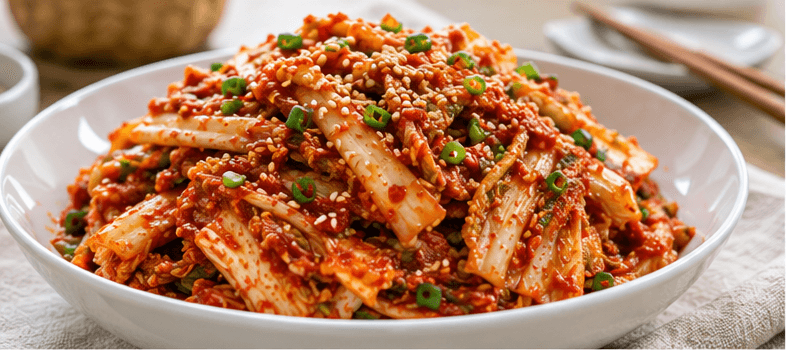
At a glance
Thirty minutes to brine, five to dress — mild napa geotjeori broken down into exact ingredient ratios and three steps, with a milder seasoning mix, brining pitfalls to avoid, and dishes to pair it with.
Gwaejolli is the "cheat code" of the kimchi world.
There is no fermentation, no aging, and no jars.
Just pickle, mix, and toss, and it’s ready that very evening—even those who usually feel daunted by kimchi-making can handle this!
And the real star of this post is "Not spicy".
If you just reduce the amount of red pepper flakes, the color fades and it looks bland, but there's actually a separate method that keeps the color while removing only the spiciness.
From a 50-50 blend of paprika powder to completely white baekgyeotjeori, we've organized everything by heat level.
🔥 Let’s get straight to the point—4 ways to keep it mild
The key is paprika powder.
Since it's made from dried, mild red peppers, it contains almost no capsaicin, so It has a red color but isn't spicy..
It's actually an ingredient used in children's kimchi instead of red pepper flakes.
Method | Composition of the Red Powder | Spicy | Color | For people like this |
|---|---|---|---|---|
① Basics | 3 tablespoons of red pepper flakes | Moderately spicy | Red | A place where the food is usually just the right level of spiciness |
② Half-and-Half Blend | 1.5 red pepper flakes + 1.5 paprika powder | Subtly spicy | Keep Red | Recommended for beginners who can't handle spicy food |
③ Paprika Only | 3 tablespoons of paprika powder | Almost none | Keep Red | Children and people who can't eat spicy food |
④ White Gwaejolli (no chili) | None (salt, fish sauce, garlic, pear) | None | White | Babies, Seniors, Hangover Cures |
The recipe below is for option ①; simply replace the red powder as shown in the table to make options ②, ③, and ④.
The rest of the seasonings and steps are all the same.
🥬 Gwaejulgi vs. Kimchi — A 3-Minute Guide
Gwaejolli is actually a food closer to a salad than to kimchi.
Once you understand this difference, you'll immediately see "why you should eat it right away."
Quick-pickled cabbage | Pogi Kimchi | |
|---|---|---|
Pickling | Briefly (about 30 minutes) | Thoroughly (for at least half a day) |
Fermentation | Not fermented — just toss it and serve immediately | Eat it after it has been aged |
Flavor Highlights | Crispness and Freshness | Deep, savory flavor |
When It Tastes Best | Immediately after making it ~ two days | A few weeks to a few months after soaking |
Refrigerate | Recommended to use up within 2–3 days | several months |
Since I don't let it ferment, the taste just keeps getting worse as time goes by.
So the classic way to make gwaejulgi is to season only as much as you'll eat, each time.
✨ Ingredients — Based on 1 head of napa cabbage (serves 4)
All measurements are based on a rice spoon.
Napa cabbage (also known as ssam cabbage) has thin, sweet leaves, making it the easiest choice for gwaejolgi.
Category | Ingredients | Amount | Substitution and Application |
|---|---|---|---|
Main Ingredients | Napa cabbage | 1 head (600–800 g) | Spring cabbage, lettuce, chives, cucumbers |
Pickling | Coarse salt | 1.5 to 2 tablespoons | — |
Seasoning | Red Powder | 3 tablespoons (see the conclusion table) | Paprika powder |
Seasoning | Anchovy Sauce | 2 tablespoons | 1 tablespoon of salted shrimp paste; for vegans, use soy sauce |
Seasoning | Plum Syrup | 1 tablespoon | ½ tablespoon sugar + ½ tablespoon oligosaccharide |
Seasoning | Minced garlic | 1 tablespoon | If you cut the amount in half, the flavor will be milder |
Finishing | Sesame Oil and Whole Sesame Seeds | 1 tablespoon each | Perilla oil |
Finishing | green onions | 3–4 stalks | Thinly sliced green onions and chives |
Just by changing the type of red chili powder, the level of spiciness changes.
🍽 How to Make It — Just marinate, mix, and toss, and you're done
Step 1 · Brining (30 minutes)
Cut the napa cabbage into bite-sized pieces (4–6 cm), sprinkle coarse salt evenly over it, and then sprinkle about half a cup of water over it, and then let it sit for 30 minutes.
If you don't have time, please pickle it for at least 20 minutes!
Be sure to flip them just once halfway through so they marinate evenly~
It's easy to tell if they're all wilted—when you bend the stem, If it bends smoothly without breaking, Passed.
Rinse once in cold water and squeeze out the excess water.
Step 2 · Mixing the Seasonings (5 minutes)
Mix the red powder, fish sauce, plum syrup, and minced garlic together in advance Let it sit for just 5 minutes..
As the powder absorbs moisture, the color spreads evenly without clumping.
Don't add the sesame oil just yet.
Step 3 · Mixing (5 minutes)
Spread the seasoning over the cabbage after squeezing out the excess moisture, and Gently Mix it all together.
If you squeeze it too hard, it loses its crispness.
Add the green onions, and finish with sesame oil and whole sesame seeds at the very end.
Take a bite as soon as it’s cooked—this crunch is a flavor that fermented kimchi just can’t match!
Spiciness (capsaicin) is fat-soluble, so oil and sweetness help mellow it out.
💰 The "Gwaejolli" Emergency Room — Prescriptions by Symptom
Symptoms | Cause | Prescription |
|---|---|---|
It's soaking wet | Not enough pickled vegetables; prepare them in advance | Toss the ingredients just before serving — use the remaining broth for kalguksu or bibim guksu |
It's too salty. | Excessive Fish Sauce | Add pickled napa cabbage; balance the flavor with sesame oil and whole sesame seeds |
It's too spicy. | Excessive chili powder | Grind up a pear or an onion and add a little plum syrup |
It has a raw, grassy smell. | Less pickled | Let it marinate for another 10 to 15 minutes, then |
Wilted after a day | The Fate of Gwaejolli | Round 2: Fried Rice, Ramen Toppings, and Tofu Kimchi |
⭐ What goes best with it?
Serving fresh kimchi alongside kalguksu is practically a rule, and the ②half-and-half blend perfectly cuts through the richness of braised pork and pork belly.
The combination of freshly cooked white rice and seasoned raw vegetables with a hint of sesame oil is so delicious that you’ll find yourself cleaning your bowl even if this is the only side dish.
The spot next to the kalguksu is always reserved for the fresh kimchi.
Just marinate, mix, and toss—and you're done! — One less thing to worry about for tonight's side dishes!
Another side dish done for today!!
Related reading
Watermelon: Everything You Need to Know in One Article — From Variety Comparisons to Milk Ice Cream
From a comparison chart of sugar content by variety—including Apple, Black Mango, and Black-skinned watermelons—to tips on how to choose them based on stripes and the “belly button,” plus recipes for whole watermelon milk ice cream and fruit punch—we’ve covered everything you need to know about watermelons this summer in one article.
Soy-Marinated Crab: Using Rock Crabs Instead of Flower Crabs — A Guide to Boryeong Stone Crabs
This guide compares the differences between flower crabs and rock crabs (also known as “dolge” or “bakhaji”) in a single chart, and includes instructions for making rock crab sauce using a 4:6 soy sauce ratio, as well as tips for ordering direct from the source at Daecheon Port in Boryeong.
The Ultimate Guide to Korean BBQ — From Grill Types to Cuts of Meat
From the differences between charcoal, briquettes, and pot-lid grills to a chart of meat cuts like samgyeopsal, hangjeongsal, and chadolbagi, plus the proper way to order a single serving and how to wrap meat in lettuce—the ultimate K-BBQ guide to mastering your first visit to a Korean barbecue restaurant.