Visiting Korea
What to wear in Korea in December and through winter: city temperatures, layers, shoes for ice
Official averages for Seoul, Busan, Jeju, Gangneung, Chuncheon and Daegwallyeong in the Pyeongchang mountains, plus what each one means for your outfit
At a glance
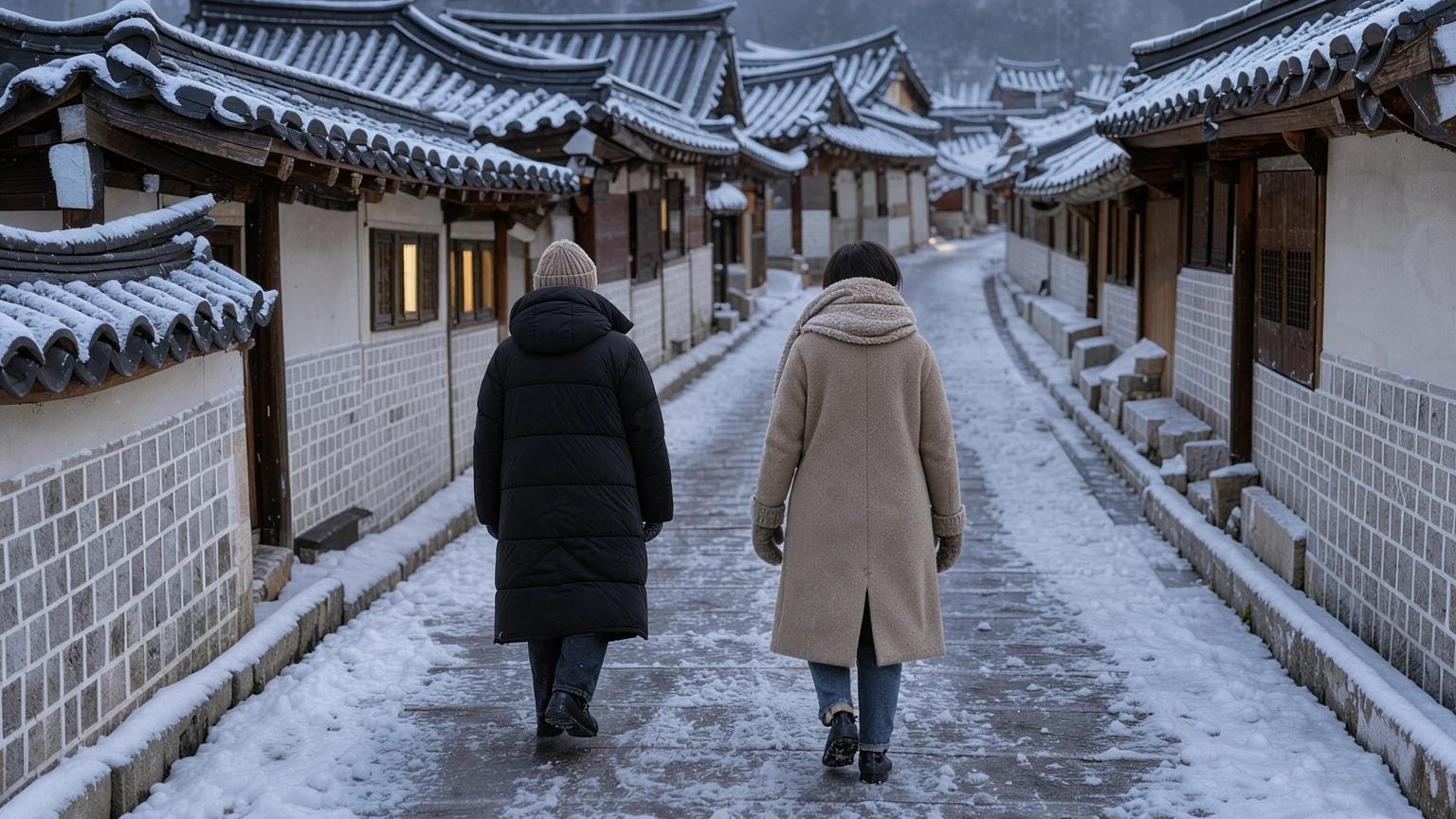
For Seoul in December, wear three layers that open at the front, plus a hat, mittens and waterproof shoes with deep tread. Busan and Jeju are milder but windy. Mornings in Chuncheon are about 3°C colder than in Seoul, and in Daegwallyeong about 6°C colder.
In Seoul, December averages a 4.2°C high and a -3.4°C low.
January is colder, at 2.1°C and -5.5°C.
Three layers will cover it: a thin warm base layer, a warm mid layer, and a windproof padded jacket or thick coat that opens at the front.
Add a hat, mittens, a scarf and waterproof shoes with deep tread.
Busan and Jeju are milder but windy.
Mornings in Chuncheon (where Nami Island is) are about 3°C colder than in Seoul, and in Daegwallyeong (in the Pyeongchang mountains) about 6°C colder.
How cold is each place you might visit?
Temperatures, snow days and ice days below are 1991–2020 climate normals from the Korea Meteorological Administration (KMA), looked up on 18 November 2026. Hot pack prices further down are from Daiso Mall on the same date.
These are long-term averages, not a forecast for this winter.
Check the actual forecast for your dates before you pack.
Place | December day / morning | January day / morning | December snow days | What to wear |
|---|---|---|---|---|
Seoul | 4.2°C / -3.4°C | 2.1°C / -5.5°C | 6.4 | Full 3 layers, hat, mittens, scarf |
Chuncheon (Nami Island) | 3.5°C / -6.6°C | 1.9°C / -9.3°C | — | Seoul outfit plus a warmer base layer and thick socks |
Daegwallyeong (Pyeongchang) | 0.5°C / -9.4°C | -1.8°C / -12.2°C | — | Ski gear or the warmest version of all 3 layers, face cover |
Gangneung | 7.7°C / -0.5°C | 5.3°C / -2.7°C | — | 3 layers, a slightly lighter mid layer is fine |
Busan | 10.4°C / 2.0°C | 8.2°C / -0.1°C | 0.9 | Lighter mid layer, windproof outer layer, scarf |
Jeju (Jeju City) | 11.0°C / 5.6°C | 8.6°C / 3.7°C | 5.3 | Lighter mid layer, waterproof and windproof outer layer |
"Day" is the average daily maximum and "morning" is the average daily minimum.
"Snow days" counts days when KMA observed snow, not days with snow on the ground.
A dash means the KMA table we used has no snow-day figure for that station.
A few numbers that don't fit in the table also change what you pack:
Seoul ice. KMA recorded ice on 26.7 days in an average December. In Busan it was 15.0 days. Ice days are a warning that pavements can freeze, not a count of icy streets.
Jeju wind and rain. Jeju City averages 4.1 m/s of wind in December and 11.5 days with precipitation. Seoul's December average is 2.3 m/s.
Daegwallyeong wind. The December average is 4.9 m/s. That's on top of the coldest temperatures in the table.
Seoul dryness. December relative humidity averages 57.8%, and heated rooms are drier than that.
On KMA's regional climate page, January is Seoul's coldest month (mean -1.9°C), and the first snow normally comes around 20 November.
So by December, the city is in full winter.
For month-by-month weather, air quality and holidays, see which month to visit Korea.
The 3-layer outfit for cold streets and hot subways
Getting through the cold outside is the easy part.
The hard part is going in and out all day.
Subway cars, shops and cafés are heated.
If you stay zipped up in a big coat, you sweat, and then the damp clothes chill you when you go back outside.
The cold-weather guidance from the Korea Disease Control and Prevention Agency (KDCA) warns about this: sweat can cost you body heat, so take off a layer when you feel too hot.
Base layer: thin and warm. Wear long sleeves that reach your wrists, and long underwear for Chuncheon or the mountains. KDCA notes that base layers of wool, silk or synthetic fabric hold heat better than cotton.
Mid layer: a sweater or fleece. This is the layer you change by place: thick for Seoul and Chuncheon, lighter for Busan and Jeju. Pack two so one can dry.
Outer layer: windproof, opening at the front. A padded jacket or a thick coat with a full zip or buttons. Open it when you get on the subway and fasten it before you step outside. KDCA advises keeping the outer layer closed tightly so the wind doesn't strip your heat.
KDCA's general rule is several slightly loose, light layers, kept dry.
Loose layers trap warm air and are easier to peel off indoors than one heavy, tight piece.
Accessories do more than an extra sweater:
Hat. KDCA recommends a hat because body heat escapes through the head.
Mittens rather than fingered gloves. KDCA says mittens keep hands warmer. Touchscreen gloves are handy, but mittens are better for long stretches outside.
Scarf and mask. KDCA advises wrapping your neck with a scarf and wearing a mask to protect your lungs from cold air.
Ondol rooms are hot and dry
Many Korean guesthouses and homes use ondol heating, which warms the floor.
The floor can feel hot and the air gets very dry overnight.
KDCA puts comfortable indoor conditions at 18–20°C and 40–50% humidity.
If your room is far warmer, turn the heat down rather than sleeping in base layers.
Pack lip balm and moisturizer.
Residents setting up their own boiler can read how to run a Korean gas boiler in winter.
Which shoes for icy pavements?
Wear waterproof shoes with a wide sole and deep anti-slip grooves.
That's KDCA's description of a safe winter shoe, and it matters in a city that records ice on 26.7 days in an average December.
Fashion boots with smooth soles and worn-out sneakers are the shoes most likely to slip on frozen pavement.
When you shop or pack, check three things:
Waterproof. Slush soaks canvas and mesh fast, and wet feet get cold quickly.
Deep tread. Turn the shoe over. You want visible grooves, not a flat or worn sole.
Wide, stable sole. A broad, flat base is steadier than a narrow heel.
How you walk matters as much as the shoes.
KDCA advises avoiding ice where you can, bending slightly to lower your center of gravity, and cutting your walking speed and stride by 10–20%.
Mittens and a scarf make it easier to keep your hands out.
Watch for frozen patches in shade, on sloped streets and on smooth stone at subway entrances.
What does a cold wave alert mean for your outfit?
A cold wave advisory or warning means the next morning will be colder than the outfit above was planned for.
On those days, add a layer: long underwear, a thicker mid layer, or a face cover.
KMA issues both alerts between October and April.
These are its published criteria:
Alert | Issued when the morning low is expected to… | …or when |
|---|---|---|
Cold wave advisory | Drop 10°C or more from the day before, reach 3°C or lower, and be at least 3°C below normal | A morning low of -12°C or lower is expected to last 2 days or more |
Cold wave warning | Drop 15°C or more from the day before, reach 3°C or lower, and be at least 3°C below normal | A morning low of -15°C or lower is expected to last 2 days or more |
Thresholds are from KMA's special weather report criteria page, read 18 November 2026.
The first condition covers a sudden drop, even if the temperature itself isn't extreme.
The second covers cold that lasts several days.
For context, Daegwallyeong's average January morning (-12.2°C) is already below the -12°C line, so ski trips in a cold snap need full ski clothing, not city layers.
If an alert on your phone is only in Korean, check KMA's English site.
On the KMA English website, the Forecast menu has Current Severe Weather Status and Short-Range Forecasts.
How to adjust for skiing, Nami Island, Busan and Jeju
Skiing in the Pyeongchang area. Daegwallyeong, a highland area of Pyeongchang County, has its own KMA weather station.
It's the coldest place in the table: -9.4°C on an average December morning, with 4.9 m/s wind.
Resorts are at different heights, so use these figures as a guide rather than a reading for a specific slope.
Wear proper ski clothing over a base layer and cover your face and neck.
For transport and costs, see our Pyeongchang ski day guide.
Nami Island and Chuncheon. Nami Island is in Chuncheon.
Chuncheon's average December morning is -6.6°C, against -3.4°C in Seoul, and January mornings average -9.3°C.
Leave Seoul in the warmest version of your outfit, with long underwear and thick socks.
Night lights and Christmas displays. Standing still at an outdoor event chills you faster than walking.
For long evenings outside, add a layer and bring hot packs.
Busan. December days average 10.4°C, which can feel mild at noon.
Mornings average 2.0°C, though, and the sea wind makes them feel colder.
A windproof outer layer and a scarf matter more here than a very thick mid layer.
Jeju. Jeju City is the warmest place in the table (11.0°C / 5.6°C in December), but its December wind averages 4.1 m/s, against 3.3 m/s in Busan and Gangneung, and it gets the most December precipitation in the table, 55.6 mm.
With 11.5 precipitation days in December as well, your outer layer should be waterproof as well as windproof.
The mountain is a separate trip with its own gear rules: see Hallasan in winter.
What to buy after you arrive
Hot packs are cheap at Daiso, so you don't need to fill your suitcase with them.
On 18 November 2026, Daiso Mall, the chain's online store, listed a 5-pack of mini hot packs for and a shoe hot pack set of 3 pairs (6 pieces) for .
The same packs are sold in Daiso shops.
The shoe packs go inside your shoes, which helps on long outdoor days and at the ski area.
Prices can change, so check before you go.
Follow the directions on the package.
Hats, mittens, scarves and thermal underwear are easy to find in Korean shops in winter.
If you only notice the cold after you land, buy accessories first.
They're cheap and make the most difference for their size.
Packing list for December to February
Thermal top and bottoms (one set, two for long stays)
Two mid layers, such as a sweater and a fleece
One windproof padded jacket or thick coat that opens at the front
Hat, mittens and scarf
Waterproof shoes with deep, anti-slip tread
Thick socks, with spares
Lip balm and moisturizer, for dry air outdoors and heated rooms indoors
To warm up after a cold day, a jjimjilbang (Korean sauna) and winter street snacks are both cheap.
How this article was prepared
Sources checked
- KMA Open MET Data Portal, climate normals 1991–2020Linked page is in Korean— Climate table (1991–2020): December and January monthly normals and December days by phenomenon for Seoul, Busan, Jeju, Gangneung, Chuncheon and Daegwallyeong; read 2026-11-18
- KMA Weather Nuri, regional climate (Seoul)Linked page is in Korean— Seoul annual mean 12.8°C, January coldest month at -1.9°C, normal first snow 20 November
- KMA special weather report criteriaLinked page is in Korean— Cold wave advisory and warning thresholds, October–April; read 2026-11-18
- KMA English websiteLinked page is in Korean— Forecast menu with Current Severe Weather Status, Short-Range and Medium-Range Forecasts; checked 2026-11-18
- KDCA National Health Information Portal, winter cold-wave health rulesLinked page is in Korean— Layering, hat, mittens, mask and scarf, wind chill, indoor 18–20°C and 40–50% humidity, shoes and walking on ice; page updated 2026-06-02
- Daiso Mall, mini hot pack 5-packLinked page is in Korean— 1,000 won for 5 packs on 2026-11-18
- Daiso Mall, shoe hot pack 3 pairsLinked page is in Korean— 2,000 won for 3 pairs (6 pieces) on 2026-11-18
- VisitKorea, Nami Island— English name of the island and its address in Chuncheon-si
- VisitKorea, Daegwallyeong Special Tourist Zone— English spelling of Daegwallyeong and Pyeongchang
- VisitKorea, Busan and Jeju place names— English spelling of Busan and Jeju
- VisitKorea, Gangneung— English spelling of Gangneung
- Visit Jeju, Jeju City— English form of Jeju City
- Seoul Metropolitan Government newsLinked page is in Korean— English spelling of Seoul used by the city government
- Hallasan National Park official pageLinked page is in Korean— Official English name of the mountain and park
Related reading
Korean body scrub (seshin) for first-timers: what happens, what it costs, what to say
For a first Korean body scrub, walk up to the scrub corner in a big bathhouse and pay about 20,000–40,000 won on top of entry. Private shops cost more but take bookings.
Hallasan in winter: which trail to pick, how to book the summit with just an email, and the 11:30 cut-off
You need a booking only for the summit section of Seongpanak or Gwaneumsa, and you can make it with an email address. In winter you must pass the 11:30 gate, so start by about 8:00. If summit slots are gone, Yeongsil and Eorimok need no booking.
Jeju's most famous restaurant queues, and which ones you can join without a Korean phone number
Of these five famous Jeju queues, Sukseongdo is the only one the Korea Tourism Organization lists on Catchtable Global, the app's foreigner version; Jamae Guksu runs a Catchtable waitlist, Woojin Haejangguk and Yeondon mean registering in person, and Oneunjeong Gimbap books pickups by phone or at the counter.
Do you have to be naked at a Korean jjimjilbang? Dress rules, age limits, tattoos and sleeping over
You're naked only in the single-sex bath. Everywhere else you wear the uniform you're given. From 48 months, children can't enter the opposite-sex bath. At 24-hour venues, under-19s need a parent, a supervising adult or a signed consent form at night.
Lotte World tickets for foreigners: official prices, the foreigner-only pass, and whether After4 or Magic Pass is worth it
Foreign visitors usually pay least with a reseller's foreigner-only day pass (about 41,000–42,500 won), which undercuts even the official After4 ticket at 52,000 won.
Best Korean Spa in Seoul for Foreigners: Which Jjimjilbang to Pick by Neighbourhood
For a first visit or a night in central Seoul, go to Sparex Dongdaemun; Club K Seoul suits long Gangnam stays, and Aquafield suits couples and families by day.